
In a recent video, MJ Banias, an investigative journalist and anti-human trafficking researcher, listed Kagi as one of the top OSINT tools for 2026.
OSINT (Open Source Intelligence) is the practice of gathering and analyzing publicly available information from a wide range of sources.
Here's what MJ highlighted about Kagi as a powerful addition to your OSINT toolkit:
- Readily accessible location-specific search
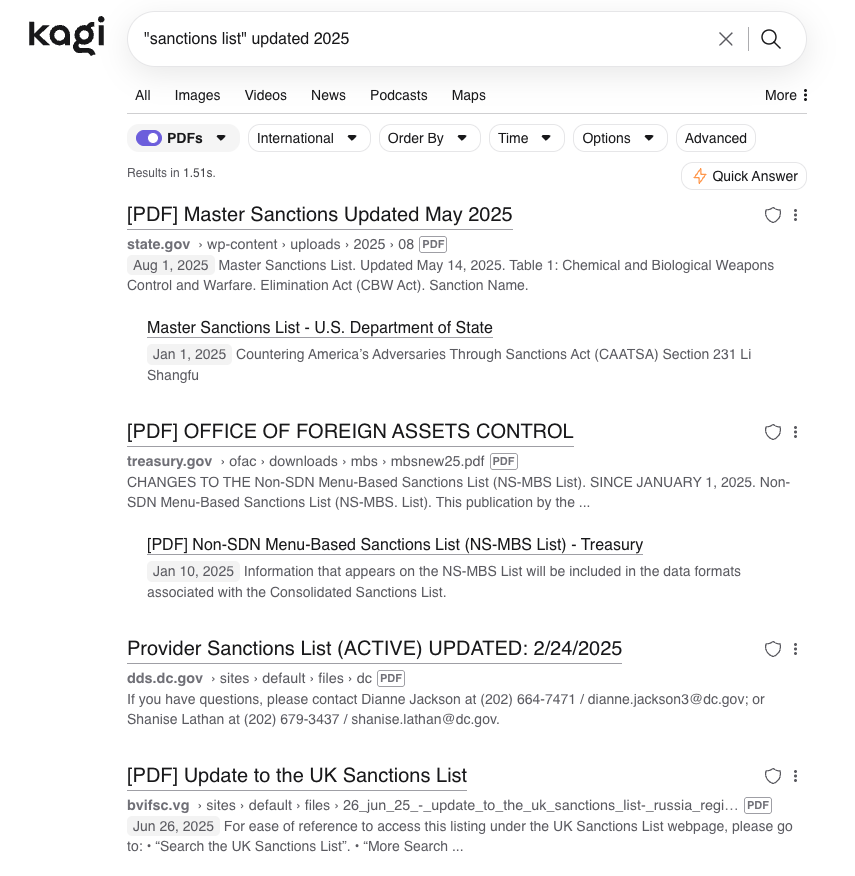
- Lenses, using the PDF lens as a primary example. Kagi lets you search directly for PDFs across the web:
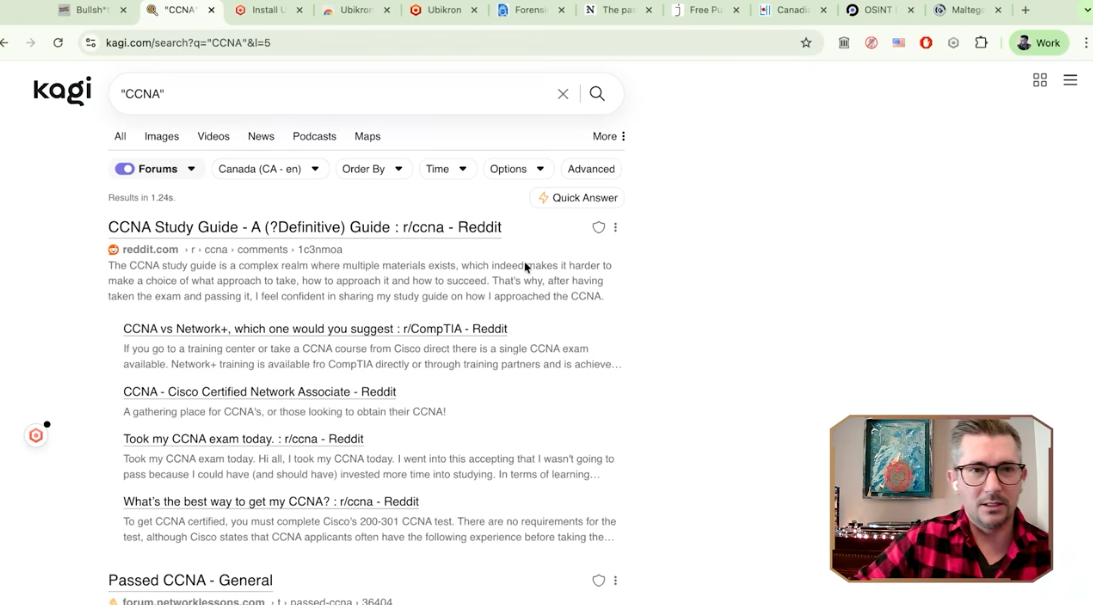
- How the built-in Forums lens is equally useful for research purposes:
- You're not bombarded by AI, which is opt-in as needed.
- Your search results are not littered by ads or sponsored content.
Why Kagi's use of multiple search indexes matters in OSINT research
MJ made an important point about search methodology:
"You should never rely on a single search engine."
This is where Kagi comes in. Rather than relying on a single index, every Kagi search simultaneously queries a dozen or more sources, including Kagi's own web index (Teclis) and news index (TinyGem), anonymized API calls to all major search providers worldwide, specialized indexes like Marginalia, and vertical sources such as Wolfram Alpha, Wikipedia, and others. Kagi's unique algorithms also down-rank pages heavy with ads and trackers, which tend to correlate with lower content quality, while promoting independent, ad-free sources and personal websites. The result is a deduplicated, re-ranked set of the most relevant results across all of them, delivered in a split second.
For OSINT work, this is a significant advantage. Instead of running the same query across a range of different search engines and manually cross-referencing what each one found, Kagi is already doing that aggregation and curation for you. In MJ's words:
"Kagi is definitely one of those game changers, especially when you start searching for those kind of smaller things like the forums, the academic papers, the small web stuff, and PDFs, there's some pretty good stuff you can find."
Adding Kagi as your search tool fills gaps that other engines leave open, particularly for niche content, smaller publications, and document-based research.
Watch the video below to see why Kagi comes highly recommended:
Hear from Kagi members on using it for OSINT:
"My partner and I both use Kagi and we love it. Highly recommended (and often more useful than Google for OSINT as search modifiers actually work and there’s a lot less meaningless crap)" - Faine Greenwood
"Kagi has been the most groundbreaking research tool I’ve quite possibly ever had access to. Check out Kagi asap." - CyberSloth
And this post demonstrating some of Kagi's features for this use case:
: ))! @KagiHQ - is another powerful search engine that helps investigators, researchers, and analysts navigate their hunts without noise > No ad-free, customizable results, AI assistants (opt-in), and "lenses" to filter searches. Great SE to give a try!!#OSINT #Cybersecurity pic.twitter.com/NJEUkR5Gg7
— D4rk_Intel (@d4rk_intel) March 1, 2026